Essay 01 / The identity beneath the paint
Tracing an Airframe's Past
A museum label can name an aircraft in a sentence. Establishing what that name means may take an archive.
Begin with the individual, not the silhouette
Recognizing a Spitfire, a transport or an early biplane is a useful first step, but recognition is not provenance. Provenance concerns the history of a particular object: its manufacture, ownership, use, movement and entry into a collection. For an aircraft, that history is complicated by the fact that major assemblies were designed to be repaired or exchanged. An engine, wing or instrument panel need not have accompanied the fuselage throughout its working life.
Start by recording the museum’s identification exactly. A military serial, civil registration, manufacturer’s construction number and museum accession number serve different purposes. A registration can change when an aircraft changes jurisdiction or ownership. An accession number identifies a collection record rather than a production sequence. A painted number might represent a commemorated machine. Treat these identifiers as routes into evidence, not interchangeable guarantees of identity.
A celebrated name still needs a material history
The Smithsonian National Air and Space Museum’s Wright Flyer and Spirit of St. Louis are unusually well-known examples of individually significant aircraft. Their importance comes from the documented relationship between a surviving object and particular events. Yet even an exceptionally famous aircraft has a later history of transport, exhibition, treatment and changing interpretation. The moment of fame does not end the object’s biography.
The same principle applies to less celebrated survivors. A training aircraft with careful records may support stronger claims about routine service than a dramatic-looking exhibit with an uncertain origin. Historical value is not simply a ranking of famous pilots or combat victories. A maintenance annotation, an instructional modification or an unremarkable repair can connect the object to the work that kept aviation functioning.
Build a chain, and leave the gaps visible
A practical investigation moves between records and material evidence. Production documents may establish a construction identity. Service records can describe units, locations and repairs. Photographs help test an appearance at a particular time, while transfer documents explain how the aircraft reached a museum. Restoration reports should identify later interventions. No single source necessarily resolves every question, and absence from one file does not prove that an event never happened.
- ConstructionIdentify the maker, variant and documented production identity.
- ServiceSeparate recorded assignments from inferred or repeated stories.
- Retirement and transferLook for storage, disposal, recovery and acquisition records.
- Museum treatmentAsk what was replaced, retained, reconstructed or repainted.
- Present displayDistinguish the object’s identity from the period or aircraft it represents.
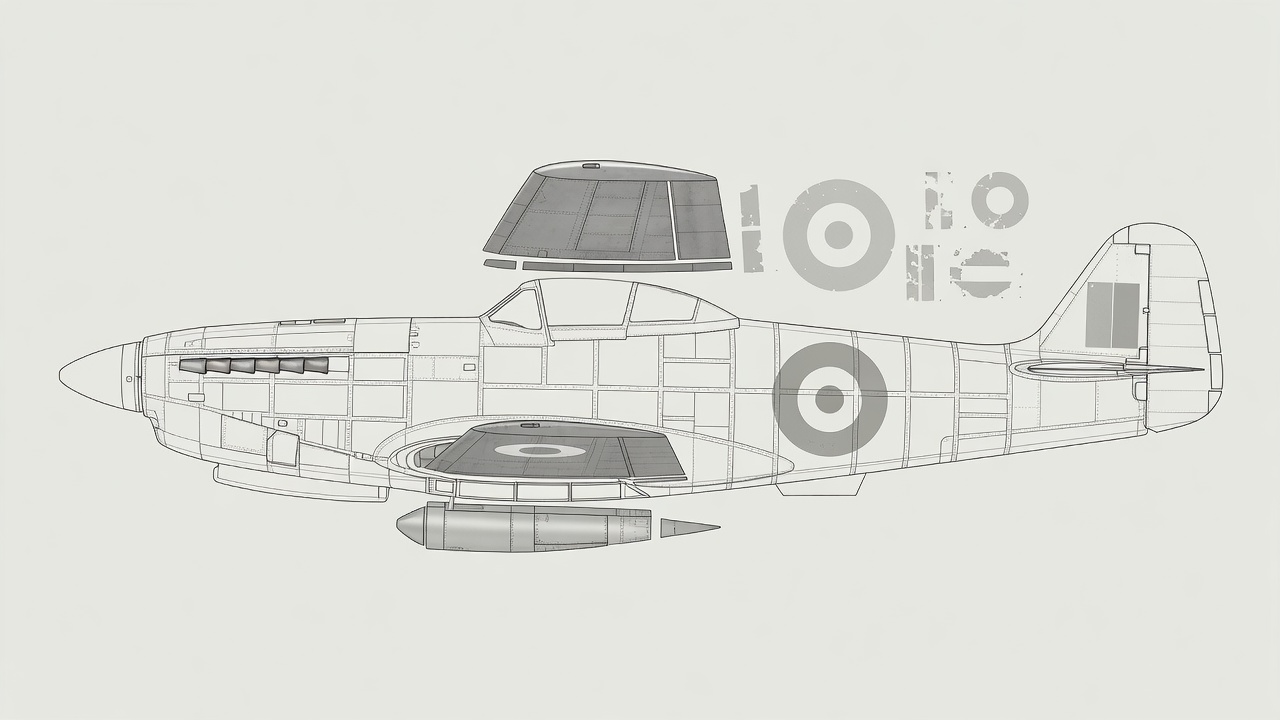
Conflicting evidence should be described rather than quietly harmonized. A photograph may show a configuration different from a surviving drawing because the machine changed after the drawing was issued. An old caption may repeat a mistaken identification. Physical evidence can also mislead: detachable plates move, parts carry their own numbers, and an authentic component does not authenticate every surrounding assembly.
Read markings as an interpretation
The RAF Museum’s Lancaster R5868 and the Australian War Memorial’s Lancaster G for George illustrate why individual histories matter even within one aircraft type. Each has its own service and preservation narrative. A generic account of the Lancaster cannot establish what happened to either survivor, and an attractive paint scheme cannot substitute for that distinction. Consult each institution’s collection material before transferring a claim from one machine to another.
Where an aircraft carries another machine’s markings, the key issue is disclosure. Commemorative representation is not inherently deceptive. It becomes confusing when a visitor is encouraged to attribute the represented aircraft’s experiences to the displayed airframe. Useful labels state both identities and explain why the chosen appearance supports the exhibition’s purpose.
Make a modest, defensible conclusion
At the end of a visit, try writing three sentences: what is securely identified, what has changed, and what remains uncertain. That small discipline prevents a museum encounter from becoming a string of unsupported claims. “This is a surviving example of the type” is sometimes more accurate than “this is the aircraft that did it.” Precision does not diminish the object; it tells the reader what kind of historical encounter is actually available.
Collections Trust’s Spectrum standard provides useful context for why museums maintain linked records for objects and their movements. Visitors do not need to become registrars, but they can borrow the underlying habit: preserve the connection between a claim and its source. A good provenance trail leaves another reader able to retrace the reasoning.